Our Blog

Our blog provides reflections on legal, policy and social developments affecting marginalised communities in the UK. Drawing on our research, engagement and advocacy work, we examine current issues, emerging debates and developments across our five themes.

#Human Rights

Four Tiers of Citizenship and Sixteen Shades of Protection

MLegal | November 2026   The theme for this year’s Islamophobia Awareness Month is “Don’t Let It Slide”. We are publishing a new article exploring how unevenly Islamophobia and other forms of racialised religious bigotry is addressed in the UK.   On paper, the United Kingdom offers a single, universal guarantee of religious liberty. In practice, however, decades of statutory provisions, case law and now inconsistent government-sponsored non-statutory definitions have produced something closer to a four-tier system of protection for groups facing racialised religious bigotry. Buddhists, Christians, Hindus, Jews, Muslims and Sikhs are protected by significantly different legal and policy mechanisms which require markedly different evidential standards.   By ‘racialised religious bigotry’ we mean hostility directed at people not simply for what they believe, but because they are perceived as belonging, by birth, descent or some other characteristic, to a religious community. A non-religious Muslim may still be targeted as a Muslim on grounds of their name or appearance.   Hostility towards both Jewish and Muslim communities is currently at record levels. In the year to March 2026, Jewish people faced the highest rate of religious hate crime relative to the size of their community, and Muslims were the victims of the largest number of religious hate crime offences: 45% of all police-recorded religious hate crimes in England and Wales. It is argued that even this figure obscures the full scale of hate crimes faced by British Muslims, who, like Jews, are targeted on grounds of both race and religion but this only includes religion and not race.   The Four Tiers Tier One: the common baseline. Every religious community sits, at minimum, on the same formal footing: Articles 9 and 14 of the European Convention on Human Rights, religion or belief as a protected characteristic under the Equality Act 2010, religiously aggravated offences under the Crime and Disorder Act 1998 and the offence of stirring up religious hatred under the Public Order Act 1986. For most, this floor is also the ceiling in law and in practice.   Tier Two: Sikhs and Jews as ethno-religious groups. Sikhs and Jews sit above that floor because of case law rather than legislative design, having been recognised as ethnic/racial groups as well as religious groups. As racial groups, they enjoy the full protection of the harassment provisions in the Equality Act 2010, which include large carve-outs for religion or belief in settings such as services, premises management, schools and associations. Hostility towards them can also be prosecuted as stirring up racial hatred, while Muslims, Buddhists, Hindus and Christians are confined to the narrower religious hatred offence, where the evidential bar is, quite deliberately, much higher.   Tier Three: Jews and the IHRA definition. Since the Government adopted the IHRA working definition of antisemitism in December 2016, Jews have benefited from a further tier of protection. What gives the definition force is a sustained programme of implementation, through an Independent Adviser and a Cabinet Committee on Antisemitism and sector reviews whose recommendations have been promptly accepted by the Government. These are welcome and necessary steps, and a great model for how the UK can tackle other forms of racialised religious bigotry like Islamophobia.   Tier Four: Muslims and the intent threshold. In March 2026, the Government adopted a non-statutory definition that drops the word ‘Islamophobia’ in favour of ‘anti-Muslim hostility’. Unlike the definition of antisemitism, however, it builds intention into every limb of the definition of anti-Muslim hostility – even where the law does not require this, for example, in discrimination and harassment. The IHRA definition, rightly, requires no intent at all for such acts. In multiple ways, therefore, the definition recognises less than the law already prohibits and Muslims are concerned that as it is rolled out to the statutory sector, it may reduce their existing Tier 1 protections in practice, even if not in law. If so, it would leave Muslims at the bottom of the hierarchy of the four tiers. Further, the promised special representative on anti-Muslim hostility has still not been appointed.   Sixteen Shades Of Protection The four-tier structure described above does not apply uniformly across the UK – as in the UK, criminal law runs under three jurisdictions (England and Wales, Scotland and Northern Ireland), discrimination law runs under separate statutory provisions in Great Britain and Northern Ireland, and administrative law and public policy differs in all four nations.   When the four tiers of protection described above are mapped onto the four nations of the UK, it is thus possible to count sixteen different shades of protection for groups facing racialised religious bigotry. These shades will only become more distinct as the non-statutory definitions underlying Tiers 3 and 4 are adopted by public and regulatory bodies in each nation, according to their own legal system, history and public discourse. Each additional shade reinforces the sense that protection depends on who you are, what you believe (or not), and where you live. That makes it harder for communities to see their struggles against hatred as a shared one, and easier for them to be set against each other.   An Urgent Case And Call For Harmonisation The consequences of this patchwork of protections are not abstract. In the summer of 2024, after the killing of three young girls in Southport and false claims online that the attacker was a Muslim asylum seeker, rioters targeted mosques and Muslims across England. In June 2025, loyalist mobs in Ballymena burned the homes of migrant families, in violence some commentators described as pogroms. Similar violence returned to Belfast and surrounding areas in June 2026, when Amnesty International said anti-Islam sentiment was a more prominent feature of these disturbances than in the past. June 2026 also saw some of the worst violence against Muslims in recent Scottish history. The last three years have also seen major antisemitic attacks on Jewish assets and people – particularly in Manchester and London. Each of these episodes drew a legal and institutional response calibrated by which nation it happened in, which minority was attacked, and therefore, which tier and laws applied to the victims.   When one community sees another’s experience of racialised religious hatred met with a dedicated adviser and reviews accepted by Government, while its own is not, the result can be resentment rather than solidarity. Those dynamics harm everyone, including the communities with the strongest protections. Harmonising protection for racialised religious groups is, therefore, no longer a ‘should’ but a ‘must’. One genuinely equal standard for all should be set at the highest level of protection any community currently enjoys, not the lowest. The principle should be one of levelling up, not levelling down. The Law Commission has recommended that protected characteristics be treated equally across hate crime law, and Parliament has acted on part of that recommendation in the Crime and Policing Act 2026 – it needs to go further.   The progress made in tackling antisemitism is real, hard-won and should be protected and built upon. We strongly support it. Equal protection is not a zero-sum contest: extending the gains made against antisemitism to other communities strengthens, rather than weakens, the case for those gains. MLegal’s Policy Paper on Equality Law Reform, published in May 2026, provides recommendations on how this can be achieved.   For a longer version of this article see: Four Tiers Of Citizenship And Sixteen Shades Of Protection For Groups Facing Racialised Religious Bigotry In The UK   As Islamophobia Awareness Month draws to a close, the case for equal protection has never been more urgent.

#Equality

Equal Pay for All: Ending the Hierarchy of Protection

The Government is right to propose strengthening equal pay protections for ethnic minority and disabled workers, bringing them closer to the protection that already exists against sex-based pay discrimination. But unless the reforms are designed with every protected characteristic in mind, they risk replacing one set of unequal protections with another.   Last week MLegal submitted its response to the Government’s consultation on pay discrimination and equal pay. We support greater pay transparency at recruitment, a stronger enforcement body, and new duties on organisations that outsource work. Our response builds on our Equality Law Reform policy paper, published in May 2026, which makes the case for harmonising equality protections in the UK and ending a framework of unequal protection based on select protected characteristics.   Our concern is with which groups the reforms leave out: people facing pay discrimination because of their religion or belief, those facing it because of more than one characteristic, and workers in segregated and outsourced jobs that the law struggles to reach. You can read the consultation here. One Law, Unequal Protection The Equality Act 2010 was meant to consolidate and harmonise protection for everyone. Yet the law still treats racialised religious groups differently and unequally. For example, Sikhs and Jews, by virtue of being recognised as ethnic groups in case law benefit from the higher protections and provisions in race hate and discrimination laws, while Muslims do not. Levelling up pay protection for race but not religion or belief would widen that gap, strengthening the rights of some racialised religious groups while leaving others behind, with no clear and consistent policy reason for the disparity.   Pay gap reporting has similar problems. The Government plans to extend reporting to ethnicity and disability, but the official standard ethnicity data does not include Jewish or Sikh as ethnic groups – so, even groups already protected as racial groups may not show up in the data. Other religious minorities would be measured only through ethnic proxies, such as Pakistani or Bangladeshi, which miss many people and capture others on grounds of race but not religion. The result is a framework that works clearly for none of these racialised religious groups.   The stakes are real. Official figures show stark pay differences between religious groups: Muslim employees, for example, have the lowest median hourly earnings of any religious group in England and Wales, at £9.63, compared with £19.22 for Jewish employees (ONS, 2020). Reforms intended to make equal pay effective cannot overlook disparities on this scale.   We have urged the Government either to amend the definition of race in the Equality Act so that it covers all racialised religious groups, including Jews, Sikhs, Hindus and Muslims, or to extend each of its equal pay and pay transparency reforms to religion or belief. Alongside this, the Government should work with the Office for National Statistics and the UK Statistics Authority to close the gaps on how racialised religious groups are captured in ethnicity data. Learning From Leading Employers Many leading employers already recognise religion or belief in their workplace. The UK Faith-Friendly Workplace Report 2025, published by the Religious Freedom and Business Foundation, found that 94 of FTSE 100 companies featured religion on their people pages in 2025, up from 79 a year earlier. The number with faith or belief staff networks more than doubled, from 12 to 26, despite a wider pushback against diversity and inclusion programmes.   Leading employers treat religion or belief alongside their other equality obligations, as both good business practice and part of meeting their legal duties. Clifford Chance places faith within its inclusion framework alongside disability, ethnicity, gender, LGBT+ and social mobility. United Utilities, the highest-scoring FTSE 100 company in the report, presents its faith-friendly approach alongside its zero tolerance of discrimination and harassment. Baringa, ranked the most faith-friendly UK workplace for the second year running, links its interfaith network to understanding its clients and communities.   Pay is the natural next step. Where business is already leading, the law should reflect and build on that practice. Leaving religion or belief out also carries a possible future cost for employers. Policies and systems would have to be adapted for race and disability now, and adapted again if religion or belief is added later. A piecemeal approach now also risks creating hierarchies between protected characteristics, damaging workplace culture and staff confidence in fair treatment. Business will ultimately inevitably pay a price for government inaction on religion or belief now. Discrimination Does Not Come In Discrete Strands Many workers face pay discrimination because of more than one characteristic at once: a woman because of her sex and her religion, or a man because of his race and a disability. The law currently struggles to recognise their experience in full. Section 14 of the Equality Act, which would allow claims for combined discrimination, has never been brought into force, and as drafted it would not cover equal pay claims.   Government research published in October 2026, Strengthening protections against combined discrimination, found that between 2% and 6% of discrimination cases involve combined discrimination, and that section 14 would be more effective if extended to cover indirect discrimination, harassment and more than two characteristics. Despite this research, however, the Government has since concluded, in its response to the equality law call for evidence, that commencing section 14 would not materially increase protection, and will instead produce guidance on how existing law applies to combined discrimination. Guidance is welcome, but the Government’s own research shows that claimants are still forced to split their experience across single-characteristic claims. We continue to call for section 14 to be commenced and updated, so that workers can bring a single claim that reflects their lived reality. The Workers The Law Cannot Reach Pay inequality is often built into the structure of work itself. Women, ethnic/religious minority workers, and disabled people can be concentrated in particular roles or parts of an organisation. Outsourced workers in facilities management, catering and cleaning are disproportionately from ethnic minority and Muslim backgrounds. Rules preventing workers from comparing themselves with colleagues employed by the same organisation, in materially the same circumstances, can shut them out of equal pay protection altogether.   In our response, and in line with our policy paper, we therefore call for: claims for work of equal value to be available for all protected characteristics, not only sex, race and disability; hypothetical comparators in equal pay claims where no real comparator exists, as they already the case in discrimination claims; outsourced workers to be able to compare their pay with staff employed directly by the contracting organisation, backed by an individual right to redress; disproportionately low pay to be open to challenge, even where the work is not technically “equal”; compensation for injury to feelings in all successful pay discrimination claims; and tribunals to be able to order wider action to prevent future pay discrimination, even where it does not benefit the individual claimant. Rights That Work In Practice, Not Just On Paper New rights mean little if workers cannot use them. Very few equal pay claims ever reach a final hearing. Of more than 40,000 equal pay complaints concluded between 2016 and 2021, just 0.09 per cent succeeded at hearing and 0.47 per cent failed (Office for Equality and Opportunity, 2026). We have therefore called for the proposed pay questionnaire to be compulsory, so that employers must answer within a set period rather than choosing whether to respond.   Enforcement matters too. Gender pay gap reporting has been mandatory since 2017, yet between 2023 and 2025 nearly 1,900 warning notices were issued to employers that failed to report, with no investigations, court orders or fines (Lewis Silkin, 2026). The full-time gender pay gap has fallen from 9.1 per cent in 2017 to only 6.9 per cent in 2025 (ONS, 2025). Light-touch enforcement delivers only gradual change. The new Equal Pay Regulatory and Enforcement Unit must have a remit that covers religion or belief, and it must be properly funded. It should work with civil society and community organisations, and use its enforcement powers consistently, backed by new civil penalties for non-compliance.   More broadly, as our policy paper argues, tackling pay discrimination needs to become more preventative, rather than relying on individual workers to bring claims. Regular pay audits, job evaluation and pay transparency, backed by external enforcement, would identify and address unfair pay before litigation becomes necessary. Getting It Right The First Time In its response to the equality law call for evidence, the Government set out a two-part approach to equal pay: first strengthening the current system, then broaden the protections to close the gaps in the law. Religion or belief must be part of that second stage.   The Government has an opportunity to make the right to equal pay real for every worker. Its reforms should be built around equal protection for all: covering religion or belief, recognising combined discrimination, reaching segregated and outsourced workers, and backed by an enforcement body with the remit, resources and powers to act. Employers can play their part by building on the inclusive practice many already lead on and checking whether pay differs across protected characteristics. We invite colleagues across civil society to make the case with us that equal pay must mean equal pay for all.   We will not close pay gaps by protecting some workers and leaving others behind nor create a labour market in which equal work carries equal value unless all workers, whether defined by race or disability, or religion or belief, are treated equally. A reform that strengthens equal pay for some protected characteristics but not others would only deepen the hierarchy of protection that already exists, in the law and in the workplace. The Government should get this right the first time.   #EqualPay #ReligionOrBelief #1forEquality #EqualityAct

#Equality

Bringing Class Back In: How the Socio-Economic Duty Can Heal Our Divided Communities

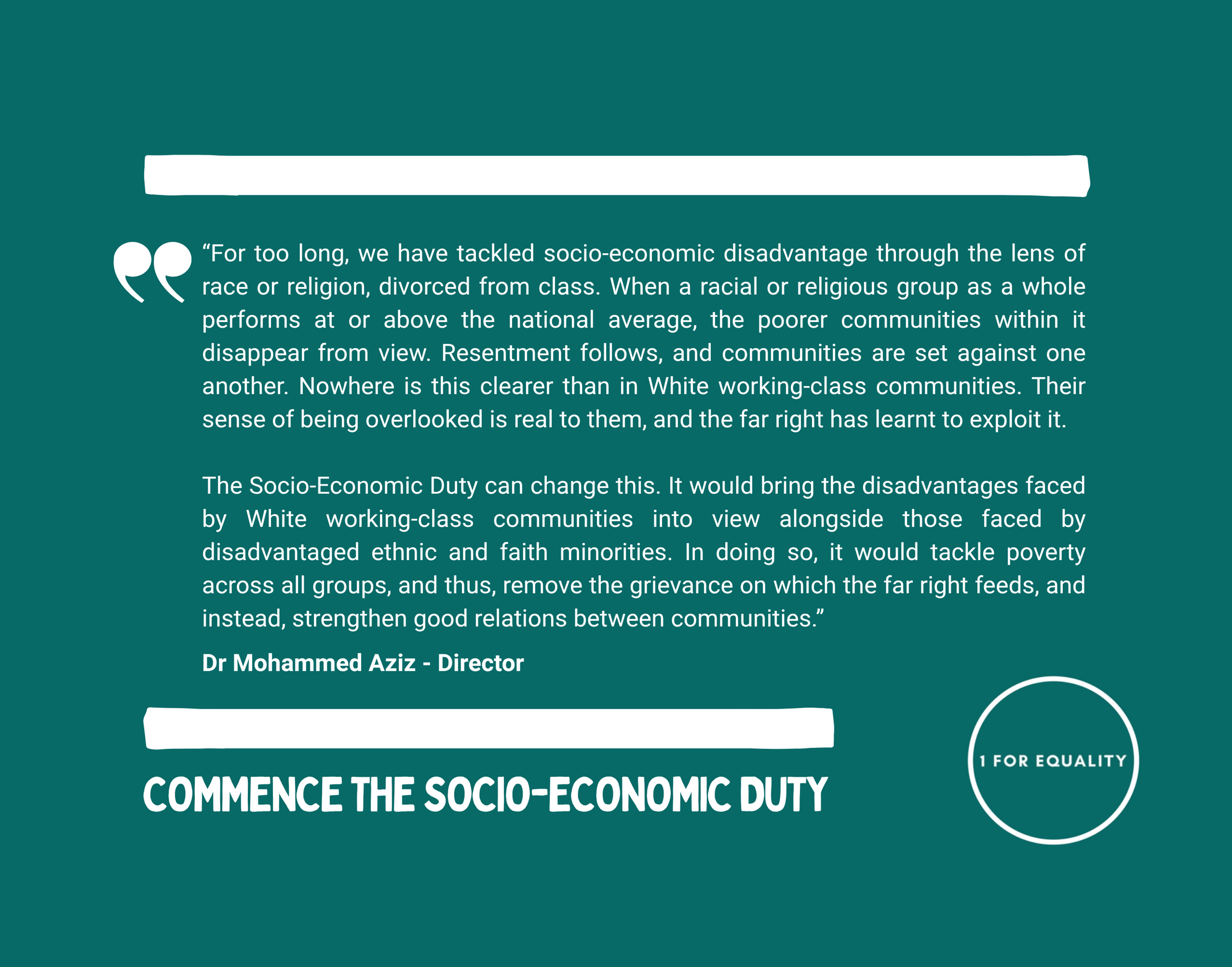
Dr Mohammed Aziz, Director, MLegal   The far right is on the rise and racial and religious polarisation in our communities is deepening. Part of the explanation for this lies in how this country has approached issues of poverty and disadvantage over the years. This Challenge Poverty Week, I argue that we cannot reduce poverty, or heal these divisions, while race and class are treated as separate, discrete questions.   I have worked on equality and community cohesion for more than 30 years, including as a Commissioner at the Commission for Racial Equality and as a senior adviser to government on race, faith and integration. Throughout that time, I have consistently argued for stronger protections for racial and religious minorities, particularly where race and religion are conflated, and I still do. But I have also seen how equality policy that addresses race and religion without addressing socio-economic class has overlooked some disadvantaged communities and left them pitted against others. The Socio-Economic Duty in section 1 of the Equality Act 2010, which has lain unused in England since it was passed, offers a way to change that.   The scale of the challenge is stark. A record 7.4 million low-income families cannot afford essential items, the highest figure since tracking began in 2021 (Joseph Rowntree Foundation, 2026) and around 80% of people think the gap between those on high and low incomes is too large (Institute for Fiscal Studies, 2026).   Race And Religion Divorced From Class For too long, we have tackled socio-economic disadvantage through the lens of race or religion, divorced from class. Yet the public understands that class still shapes lives: 77% say social class affects a person’s opportunities a great deal or quite a lot, up from 70% in 1983 (British Social Attitudes, 2023).   The problem lies behind what averages hide. When a racial or religious group as a whole performs at or above the national average, the poorer communities within it disappear from view. A struggling White working-class estate, or a low-income community within an ethnic or faith group that appears to be doing well overall, can fall straight through the gaps.   The people living in those communities notice. They see support and attention going elsewhere and conclude, understandably, that the system is not built to ‘see’ or support them. Resentment follows, and communities are set against one another.   The Grievance Feeding The Far Right Nowhere is this clearer than in White working-class communities. Their sense of being overlooked is real to them, and the far right has learnt to exploit it, telling them that their hardships are the fault of neighbours of a different colour or faith.   The consequences are visible on our streets. Racial and religious polarisation has risen sharply in recent years, as the far-right rallies in London in September 2025 and May 2026 made plain. Muslim communities, many of whom face deep poverty themselves, have borne the brunt of that hostility.   The tragedy is that the communities being set against each other often have more in common than what divides them: insecure work, poor housing, struggling schools and poor health. As long as our equality framework treats racial and religious groups as socio-economically uniform blocks, and says nothing about class, the disadvantaged within them will remain unrecognised and unaddressed. That silence hands extremists a ready-made grievance.   The Socio-Economic Duty: A Tool For Common Cause The Socio-Economic Duty can change this. Section 1 of the Equality Act 2010 requires public bodies, when making strategic decisions, to have due regard to reducing the inequalities of outcome that result from socio-economic disadvantage. Put simply, councils, development agencies, education authorities, health bodies and government departments would have to ask how their decisions affect people on low incomes and in deprived areas, whoever they are, whatever their colour, and whichever their faith.   That is what makes the duty a tool for common cause. It would bring the disadvantages faced by White working-class communities into view alongside those faced by disadvantaged ethnic and faith minorities. In doing so, it would tackle poverty across all groups, and thus, remove the grievance on which the far right feeds, and instead, strengthen good relations between communities. It does not replace protections against racial or religious discrimination; it complements and reinforces them.   Parliament passed the duty in 2010, yet it has never been brought into force in England, although Scotland and Wales have both commenced it, in 2018 and 2021 respectively. Evaluations in both regions by the Equality and Human Rights Commission point to its potential to improve outcomes for White and ethnic minority working-class communities alike. The Government committed in 2024 to commencing the duty in England, has gathered evidence on how to implement it and, last month, named it an early priority for its new Class Unit. I warmly welcome that commitment. What England needs now is a date.   The Ground Is Ready Across England, many councils have not waited for national action to take the initiative. Research by Resolve Poverty found that 10% of councils have formally adopted the duty voluntarily, and a further 51% work in its spirit, usually by building socio-economic disadvantage into their equality impact assessments (Resolve Poverty). These councils show what is possible, and their experience should shape how the duty is rolled out nationally.   The public is ready too. More than half of people (56%) want the government to activate the duty, with just 6% opposed (Compassion in Politics poll by Opinium, 2020). Some 53% now agree that the government should definitely reduce income differences between those on high and low incomes, up from 25% in 2006 (British Social Attitudes, 2023). And 78% agree the government should be reducing child poverty, a majority in every age group and among voters of every party (Save the Children UK and YouGov, 2026). Those who claim there is no appetite for this duty are simply wrong and out of step with public opinion.   Duty Done Properly, Not As A Tick Box A duty that exists only on paper will not deliver. To reach the communities I have described, it must be implemented with genuine intent, adequate resources and sustained effort. MLegal is proud to be part of 1forEquality, the coalition campaigning for the duty’s meaningful implementation, and we share its priorities:   Leadership and participation. Senior leaders must own the duty. People with lived experience of disadvantage should help shape it as co-creators, not “case studies”, and their involvement should be paid and properly acknowledged. Evidence, not tick boxes. Impact assessments must be rigorous, draw on the best available data, including data held by civil society, and capture cumulative and intersectional effects over time. Outcomes, not processes. Measurable national and local targets should be set in housing, health, education, employment and criminal justice. Guidance and support. Strong statutory guidance, a central support hub like the one piloted in Scotland, and partnerships with civil society should underpin implementation. Wider scope. The list of public bodies covered by section 1(3) should be updated to at least match those in Scotland and Wales. Commencement and futureproofing. A firm commencement date should be set by Commencement Order, and the duty protected from political rollback by a principle of non-regression. Section 1(6), which excludes people subject to immigration control, should not be commenced: it would be impractical, would conflict with the Public Sector Equality Duty and human rights law, and could expose authorities to judicial review. If it is commenced, guidance should make clear that excluding these people is neither required nor practical.   Done well, the duty would also help the UK meet the Sustainable Development Goals on ending poverty, reducing inequalities and building peaceful, inclusive societies.   Our Call At MLegal This Challenge Poverty Week The Socio-Economic Duty is already law, and the Government has, in principle, committed to commencing it. What is still missing is a date and an implementation plan that ensures the duty reaches disadvantaged communities of every background, including those hidden within group averages. We therefore call on:   The Government to turn its commitment into action by announcing a timetable for commencing section 1 in England, and to protect the duty from future rollback. Public bodies to implement the duty under strong statutory guidance that requires them to look beneath group averages so that disadvantaged sub-groups within every racial and religious group, including White working-class communities, are no longer overlooked. The duty should work alongside the Public Sector Equality Duty, so that race, religion and class are addressed together rather than in isolation. MPs of every party, and backbenchers in particular, to champion the duty as a means of both tackling poverty and strengthening relations between communities. Poverty touches every constituency. Colleagues across civil society to make the positive case with us, and to challenge the misleading claims made against the duty.   We will not defeat poverty and social division by setting communities against each other over who is the most disadvantaged. We will defeat them by recognising disadvantage wherever it falls and acting on it together. The Socio-Economic Duty gives us the means to do that. It is time England applied it.   #ChallengePovertyWeek #1forEquality #SocioEconomicDuty

#Inclusion#Freedom of Expression

A Day in Policy: Reflections from MLegal’s Graduate Associates

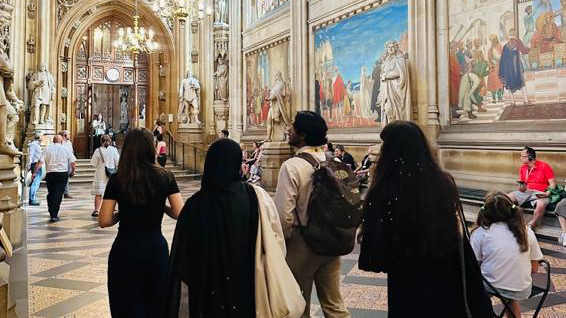
By Rawan El-Itani, Iman Jaura and Shuaib Amin   As Graduate Associates at MLegal, we have spent the year discussing, researching and presenting on policy issues affecting Muslim and marginalised communities. Last month, we had the opportunity to join the team and shadow them for the day, an experience that gave us a rich insight into how policy is actually made.   Where Ideas Take Shape   The day began with a lunch meeting where the MLegal team presented their research and work on Islamophobia and antisemitism, joined by representatives from civil society organisations working on the same issues. For Rawan, the session was notable above all for what it modelled: “Muslim and Jewish colleagues come together to advocate for the protection of minorities and challenge discrimination.”   We then sat in on a conversation between MLegal and those civil society organisations, an experience that gave us a rare view into how ideas move from grassroots concern to policy recommendation. Iman found it invaluable simply to observe the process, describing it as “fascinating to hear… about their work on Islamophobia, antisemitism and the varying forms of racial abuse.” As an aspiring policy professional, she was struck by “the practicalities and limitations of policy work,” particularly how long it can take for ideas to reach the table and be carried forward, tempered by “the importance of and the promotion of equality and justice.”   Shuaib came away with a similar but more structural insight, into how different forms of discrimination intersect in practice. Tackling Islamophobia, he noted, is rarely argued on the grounds of belief alone. It is often framed alongside gender inequality too, given the disproportionate impact on Muslim women whose identity is visibly marked. Antisemitism, he observed, carries a comparable but distinct dimension, where race compounds the recent rise in anti-Jewish hate crime. The result, in his words, reshaped how he saw the wider landscape: “What I initially believed to be a divided battle over who gets to be in the current policymaking limelight is more like a united front, where the strength of recommendations lies in their unity rather than in their individual political dynamics.” Building bridges between communities, he added, is “not only a grassroots social strategy but also a legal method that enabled each group to gain greater political representation without diluting their individual identities.”   Reflecting On Our Own Progress   Later, we met with Diana and Dr Aziz to reflect on our progress as Graduate Associates. It was a chance to share our own thinking as much as to absorb others’. Rawan valued the space to “share my thoughts, feel heard and gain a better understanding of the process of developing effective policy,” and singled out Dr Aziz’s framework of six steps for achieving a policy goal as a genuinely practical tool for thinking through how change gets made.   Parliament, Past And Present   We closed the day with an informal meeting with a member of MP Fabian Hamilton’s team, who gave us a tour of Parliament and spoke about the different career pathways into working there. Iman appreciated the layered perspective this gave the day, moving from a conversation about the link between policy and legislation with civil society groups to seeing where legislative change is actually implemented. She also came away with a clearer sense of “how legislation comes to pass and how it is discussed and voted on in practice.”   For Rawan, one moment stood out above the rest: learning about the small broom cupboard where suffragette Emily Wilding Davison hid overnight in 1911, using it as her address in an effort to establish a connection to the House of Commons and make a statement about women’s right to vote. Standing in that space, she said, was “a powerful reminder of the determination and sacrifices made by those who fought for political equality.”   A Grateful Close   Between contemporary efforts to tackle Islamophobia and antisemitism and a physical connection to the history of the suffrage movement, the day was, in Rawan’s words, “a powerful reminder that meaningful change is driven by people who are willing to speak up, advocate for others and take action.” Shuaib echoed this in describing why the Associates programme matters to his own development as an aspiring public lawyer, offering “fresh perspectives and in-depth analysis of the dynamics at play in developing policies.”   We are grateful to MLegal, to Diana, to Dr Mohammed Aziz, to the civil society organisations who welcomed us into their conversations, and to one another, for a day that left us inspired, better informed and looking forward to what the rest of the programme has to teach us.

#Freedom of Expression#Inclusion

Reflecting on My Internship at MLegal

Over the past five weeks, my role as a Policy Research Intern at MLegal has given me exceptionally insightful experience and knowledge. I was shortlisted by the Queen Mary University of London careers team and selected by MLegal for this position. The internship has allowed me to deepen my understanding of the policy and legal landscape in the United Kingdom and beyond, combining rigorous research work with direct involvement in the advocacy and networking activities of a leading policy organisation.   My role as an intern has involved researching prevalent social issues and the policies issued in response to them. I have completed six different research tasks, each of which continued to build on the previous skills and knowledge I gained. The research tasks have not only encouraged me to think critically about the policy concerns facing the UK’s diverse population today, but they have also repeatedly sparked my curiosity as I worked through and completed them. One of my favourite tasks was to produce a researched report on how and why the Human Rights Act’s Articles 9, 10, and 11 are currently under threat.   Furthermore, the exposure to and engagement with a variety of policy institutions and individuals have provided me with valuable industry awareness. Some of the meetings I attended and took notes on were with the Green Party, the Avicenna Foundation, and the European Centre for Human Rights (ECHR). In addition, attending the MLegal Community Forum, where I was able to observe several presentations and the feedback they received from experts and consultants at MLegal, was a very insightful and helpful experience.   All in all, my role as an intern has been thoroughly insightful, enjoyable, and thought-provoking. I have gained exceptional research and interpersonal skills, as well as a knowledgeable and informed perspective on policy. Thank you very much to Diana Hysenaj for providing me with excellent-quality tasks and guidance, and thank you very much to Dr Aziz for sharing his learnt policy perspective with me.   Moving forward, I hope to continue gaining more experience and knowledge about legal processes from start to finish, from policy reasoning to making claims to consequential decisions and outcomes.   Kinda Nashef

#Justice & Accountability

Community Response To The Social Cohesion Strategy

Understanding the Government’s Social Cohesion Strategy: MLegal’s Latest Community Briefing   MLegal is pleased to publish one of its latest community briefing, Response to the Government’s Social Cohesion Strategy, providing an accessible analysis of the Government’s Protecting What Matters strategy and its implications for Muslim communities, civil society organisations, policymakers and other stakeholders.   This briefing has been prepared by MLegal, drawing on discussions with civil society organisations, experts and academics working in this field. It explains the Government’s Social Cohesion Strategy, identifies key concerns for Muslim and marginalised communities, and supports communities to navigate the emerging policy landscape with confidence.   Understanding the Government’s Strategy   The Government’s Social Cohesion Strategy sets out a vision for strengthening belonging, resilience and participation across the UK. It includes commitments that many communities may welcome, including investment in local communities, youth provision, support for places of worship, action against anti-Muslim hate, employment initiatives and programmes intended to strengthen community cohesion.   Alongside these proposals, the strategy introduces or reinforces measures connected to counter-extremism, Prevent, institutional oversight, regulatory powers and local risk assessment. As these policies are implemented across public institutions and local authorities, it is important that communities understand how they may affect civic participation, governance and community engagement.   What the Briefing Covers   The briefing provides a detailed examination of the strategy, including:   The relationship between social cohesion, counter-extremism and national security policy; The implications of the 2024 extremism definition and Prevent-related measures; The Government’s approach to addressing anti-Muslim hostility and the continued importance of recognising Islamophobia; The potential impact on charities, mosques, universities, schools, students and wider civil society; The role of local authorities, neighbourhood boards and public bodies in implementing the strategy; and Practical guidance to help communities understand, monitor and engage with the policy as it develops.   Rather than focusing solely on policy analysis, the briefing is designed as a practical resource to help organisations prepare for implementation, strengthen governance, understand their rights and responsibilities, and engage confidently with public institutions.   Practical Guidance for Communities   Recognising that implementation will largely take place at the local level, the briefing includes sector-specific guidance for:   Mosques and faith institutions; Charities and community organisations; Universities and student societies; Parents and education advocates; and Local civil society organisations and community leaders.   It also sets out an immediate action checklist to support organisations in monitoring implementation, documenting emerging issues, strengthening governance and building collaborative local responses.   Read the Full Briefing   As the Government’s Social Cohesion Strategy begins to shape policy and practice across the UK, it is important that communities and organisations understand both its proposals and their practical implications.   We invite you to explore the full briefing to learn more about the strategy, the issues it raises and the practical guidance it provides for communities, practitioners and policymakers.   Read the full community briefing here: Click Here

Community Forum – Understanding Contemporary Challenges

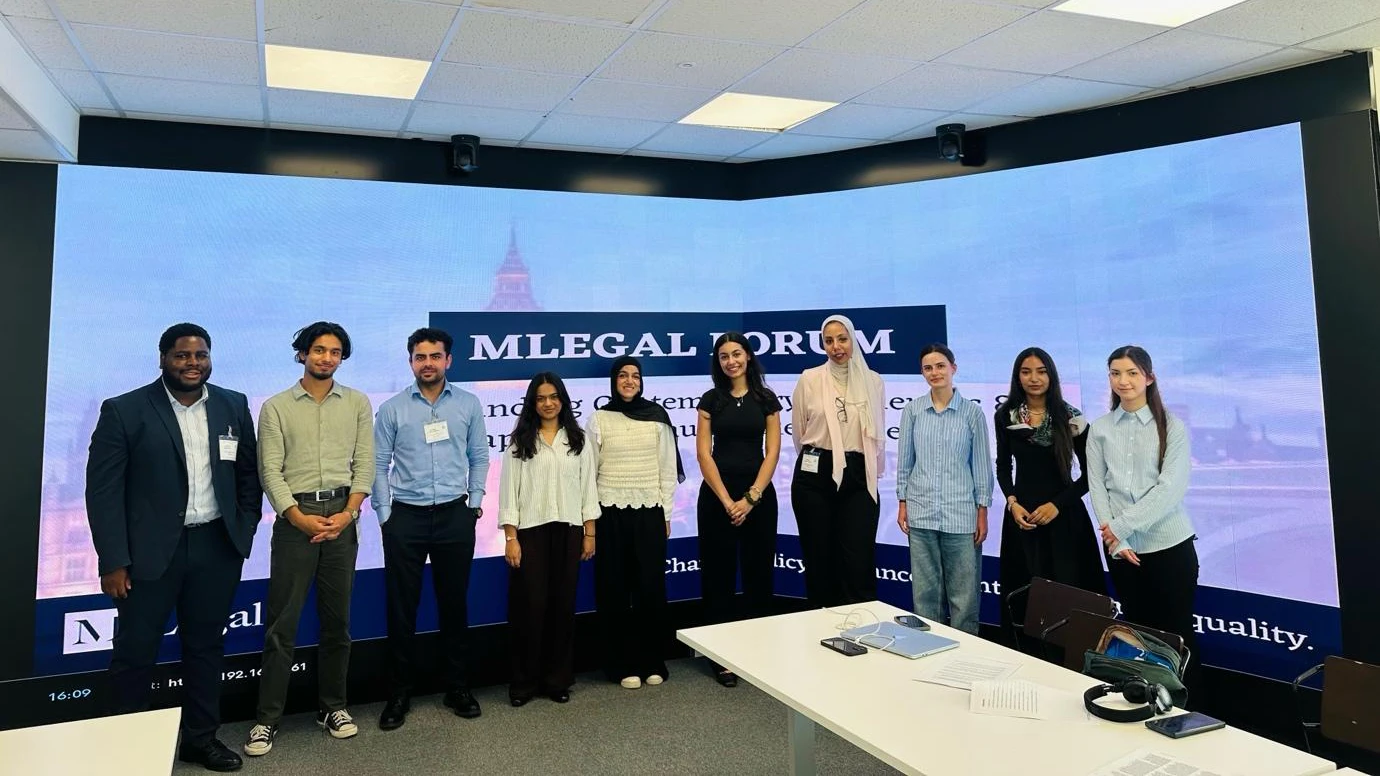
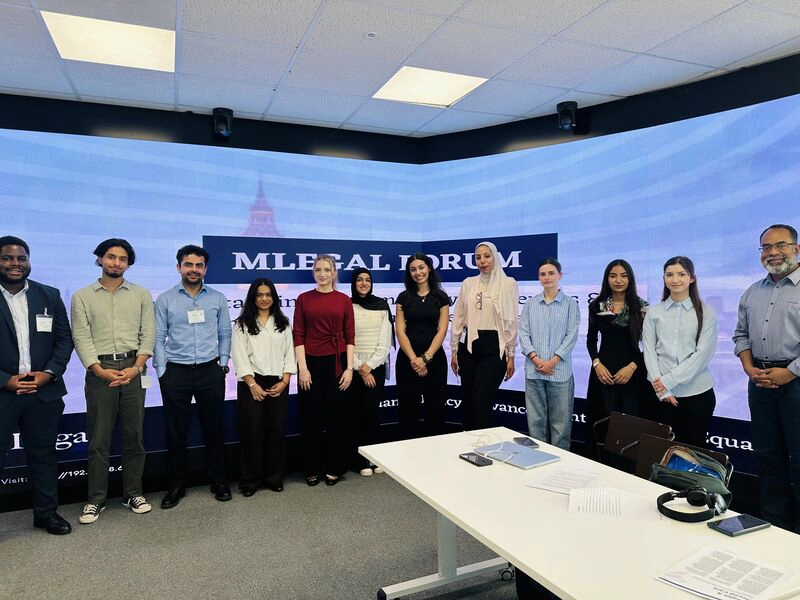
Last week, we hosted a Community Forum on Understanding Contemporary Challenges and Shaping Community Responses, bringing together academics, policy experts, and our MLegal Volunteer Associates for a day of thoughtful discussion, shared learning, and collaboration.   Together, we explored some of the key issues affecting Muslim and marginalised communities today, including the rise in antisemitism and Islamophobia, gendered Islamophobia, emerging forms of extremism, the implications of the Leicester Report, and the development of the Muslim Manifesto as a framework for future policy and advocacy.   The conversations throughout the day reinforced the importance of evidence-based research, cross-sector collaboration, and meaningful community engagement. The Forum also provided a valuable opportunity to exchange ideas, strengthen partnerships, and identify practical ways to take this work forward. A huge thank you to all of our speakers, respondents, and attendees for sharing your expertise, perspectives, and time. Your contributions made the day a real success.   This Forum marks the start of an exciting programme of work at MLegal. As we continue developing the Muslim Manifesto and expanding our research and policy work, we look forward to working alongside a growing network of Associates and partners committed to advancing justice, equality, and human rights.   If you’d like to get involved in our future events, research, or the MLegal Associates Programme, we’d love to hear from you. Get in touch at enquiries@m-legal.org.   #MLegal #CommunityForum #Policy #HumanRights #Equality #Islamophobia #Antisemitism #Research #Advocacy #MuslimManifesto

#Justice & Accountability

DLA Statement

MLegal supports the statement issued by the Discrimination Law Association on the Public Sector Equality Duty (PSED).   The PSED plays an important role in public decision-making by requiring public authorities to have due regard to the need to eliminate discrimination, advance equality of opportunity, and foster good relations when exercising their functions. It helps ensure that equality considerations are addressed at the appropriate stage of decision-making, particularly where policies, service changes, or budget decisions may affect groups protected under equality law.   As the DLA’s statement makes clear, the PSED is a duty to consider. It does not dictate particular outcomes, require absolute equality in every circumstance, or prevent public authorities from implementing decisions that may have adverse equality impacts. Rather, it requires decision makers to properly understand and conscientiously assess those impacts before decisions are finalised.   As an organisation committed to advancing human rights and equality through legal and policy research, strategic advocacy, and community engagement, MLegal recognises the importance of legal frameworks that promote accountability and ensure that equality considerations are not overlooked.   As members of the Discrimination Law Association, we welcome this clarification of the purpose, scope, and continuing importance of the Public Sector Equality Duty.   #EqualityLaw #HumanRights #PSED #PublicSectorEqualityDuty #AccessToJustice   Read the full statement by DLA below:   FOR IMMEDIATE RELEASE   The Public Sector Equality Duty: A Duty to Consider   Discrimination Law Association Statement   The Discrimination Law Association (DLA) has issued a statement to clarify the purpose, scope and importance of the Public Sector Equality Duty (PSED), following widespread public commentary that has misunderstood its nature.   Public authorities make decisions every day that affect people’s housing, education, health, social care, policing, transport, and access to public services. The Public Sector Equality Duty is a legal mechanism that requires these bodies to consider equality when making such decisions. Consistent statistical evidence continues to demonstrate the systemic disadvantages experienced by individuals within protected characteristic groups.   The duty applies to public authorities and certain organisations when they carry out public functions. In exercising those functions, they are required to have due regard to three key aims:   Eliminating discrimination and unlawful conduct Advancing equality of opportunity between those who share a protected characteristic and those who do not Fostering good relations between different groups   In practice, this means public bodies must ask appropriate equality-related questions at the correct stage of decision-making. They must consider whether proposed policies, budget reductions, service changes, or individual decisions could impact groups protected under equality law, including disabled people, women, racial and religious minorities, older and younger individuals, pregnant women, and LGBT people.   Where equality considerations are relevant, public authorities must gather sufficient information to understand potential impacts. These impacts must then be conscientiously assessed before decisions are finalised.   However, the duty has important limits. It does not:   Dictate a particular outcome Prevent public authorities from implementing policies that may have adverse equality impacts Require absolute equality to be achieved in every circumstance Mandate formal equality impact assessments in all cases   The Discrimination Law Association emphasises that the duty plays a vital role in embedding equality considerations into everyday governance and public administration. It ensures that decision-makers address potential disadvantage proactively, rather than after harm has occurred.   Furthermore, the duty provides individuals, communities and equality organisations with a mechanism to challenge decisions where equality considerations have been overlooked or treated as secondary. The PSED originates from concerns highlighted in the Stephen Lawrence Inquiry, addressing systemic inequalities within public institutions.

#Equality

ICESCR Anniversary Letter

MLegal is proud to stand alongside Just Fair and the 76 organisations across the UK in signing a joint letter marking 50 years since the UK ratified the International Covenant on Economic, Social and Cultural Rights.   These rights, to housing, food, healthcare, education, decent work, and social security, are the foundations people should be able to rely on to live well. Yet too many are still denied them. This campaign is about turning long-standing commitments into reality.   Read the letter below and find out more 👇 #ICESCR50 #FoundationForEveryone #ESCRights #HumanRights   ICESCR Anniversary Letter

Phone

012345 798090

Email

enquiries@m-legal.org