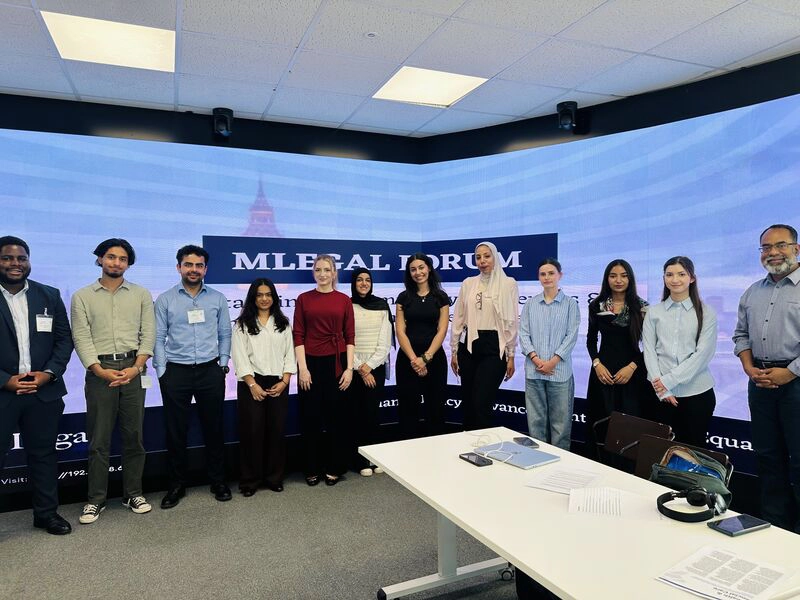
Dr Mohammed Aziz, Director, MLegal
The far right is on the rise and racial and religious polarisation in our communities is deepening. Part of the explanation for this lies in how this country has approached issues of poverty and disadvantage over the years. This Challenge Poverty Week, I argue that we cannot reduce poverty, or heal these divisions, while race and class are treated as separate, discrete questions.
I have worked on equality and community cohesion for more than 30 years, including as a Commissioner at the Commission for Racial Equality and as a senior adviser to government on race, faith and integration. Throughout that time, I have consistently argued for stronger protections for racial and religious minorities, particularly where race and religion are conflated, and I still do. But I have also seen how equality policy that addresses race and religion without addressing socio-economic class has overlooked some disadvantaged communities and left them pitted against others. The Socio-Economic Duty in section 1 of the Equality Act 2010, which has lain unused in England since it was passed, offers a way to change that.
The scale of the challenge is stark. A record 7.4 million low-income families cannot afford essential items, the highest figure since tracking began in 2021 (Joseph Rowntree Foundation, 2026) and around 80% of people think the gap between those on high and low incomes is too large (Institute for Fiscal Studies, 2026).
Race And Religion Divorced From Class
For too long, we have tackled socio-economic disadvantage through the lens of race or religion, divorced from class. Yet the public understands that class still shapes lives: 77% say social class affects a person’s opportunities a great deal or quite a lot, up from 70% in 1983 (British Social Attitudes, 2023).
The problem lies behind what averages hide. When a racial or religious group as a whole performs at or above the national average, the poorer communities within it disappear from view. A struggling White working-class estate, or a low-income community within an ethnic or faith group that appears to be doing well overall, can fall straight through the gaps.
The people living in those communities notice. They see support and attention going elsewhere and conclude, understandably, that the system is not built to ‘see’ or support them. Resentment follows, and communities are set against one another.
The Grievance Feeding The Far Right
Nowhere is this clearer than in White working-class communities. Their sense of being overlooked is real to them, and the far right has learnt to exploit it, telling them that their hardships are the fault of neighbours of a different colour or faith.
The consequences are visible on our streets. Racial and religious polarisation has risen sharply in recent years, as the far-right rallies in London in September 2025 and May 2026 made plain. Muslim communities, many of whom face deep poverty themselves, have borne the brunt of that hostility.
The tragedy is that the communities being set against each other often have more in common than what divides them: insecure work, poor housing, struggling schools and poor health. As long as our equality framework treats racial and religious groups as socio-economically uniform blocks, and says nothing about class, the disadvantaged within them will remain unrecognised and unaddressed. That silence hands extremists a ready-made grievance.
The Socio-Economic Duty: A Tool For Common Cause
The Socio-Economic Duty can change this. Section 1 of the Equality Act 2010 requires public bodies, when making strategic decisions, to have due regard to reducing the inequalities of outcome that result from socio-economic disadvantage. Put simply, councils, development agencies, education authorities, health bodies and government departments would have to ask how their decisions affect people on low incomes and in deprived areas, whoever they are, whatever their colour, and whichever their faith.
That is what makes the duty a tool for common cause. It would bring the disadvantages faced by White working-class communities into view alongside those faced by disadvantaged ethnic and faith minorities. In doing so, it would tackle poverty across all groups, and thus, remove the grievance on which the far right feeds, and instead, strengthen good relations between communities. It does not replace protections against racial or religious discrimination; it complements and reinforces them.
Parliament passed the duty in 2010, yet it has never been brought into force in England, although Scotland and Wales have both commenced it, in 2018 and 2021 respectively. Evaluations in both regions by the Equality and Human Rights Commission point to its potential to improve outcomes for White and ethnic minority working-class communities alike. The Government committed in 2024 to commencing the duty in England, has gathered evidence on how to implement it and, last month, named it an early priority for its new Class Unit. I warmly welcome that commitment. What England needs now is a date.
The Ground Is Ready
Across England, many councils have not waited for national action to take the initiative. Research by Resolve Poverty found that 10% of councils have formally adopted the duty voluntarily, and a further 51% work in its spirit, usually by building socio-economic disadvantage into their equality impact assessments (Resolve Poverty). These councils show what is possible, and their experience should shape how the duty is rolled out nationally.
The public is ready too. More than half of people (56%) want the government to activate the duty, with just 6% opposed (Compassion in Politics poll by Opinium, 2020). Some 53% now agree that the government should definitely reduce income differences between those on high and low incomes, up from 25% in 2006 (British Social Attitudes, 2023). And 78% agree the government should be reducing child poverty, a majority in every age group and among voters of every party (Save the Children UK and YouGov, 2026). Those who claim there is no appetite for this duty are simply wrong and out of step with public opinion.
Duty Done Properly, Not As A Tick Box
A duty that exists only on paper will not deliver. To reach the communities I have described, it must be implemented with genuine intent, adequate resources and sustained effort. MLegal is proud to be part of 1forEquality, the coalition campaigning for the duty’s meaningful implementation, and we share its priorities:
Leadership and participation. Senior leaders must own the duty. People with lived experience of disadvantage should help shape it as co-creators, not “case studies”, and their involvement should be paid and properly acknowledged.
Evidence, not tick boxes. Impact assessments must be rigorous, draw on the best available data, including data held by civil society, and capture cumulative and intersectional effects over time.
Outcomes, not processes. Measurable national and local targets should be set in housing, health, education, employment and criminal justice.
Guidance and support. Strong statutory guidance, a central support hub like the one piloted in Scotland, and partnerships with civil society should underpin implementation.
Wider scope. The list of public bodies covered by section 1(3) should be updated to at least match those in Scotland and Wales.
Commencement and futureproofing. A firm commencement date should be set by Commencement Order, and the duty protected from political rollback by a principle of non-regression. Section 1(6), which excludes people subject to immigration control, should not be commenced: it would be impractical, would conflict with the Public Sector Equality Duty and human rights law, and could expose authorities to judicial review. If it is commenced, guidance should make clear that excluding these people is neither required nor practical.
Done well, the duty would also help the UK meet the Sustainable Development Goals on ending poverty, reducing inequalities and building peaceful, inclusive societies.
Our Call At MLegal This Challenge Poverty Week
The Socio-Economic Duty is already law, and the Government has, in principle, committed to commencing it. What is still missing is a date and an implementation plan that ensures the duty reaches disadvantaged communities of every background, including those hidden within group averages. We therefore call on:
The Government to turn its commitment into action by announcing a timetable for commencing section 1 in England, and to protect the duty from future rollback.
Public bodies to implement the duty under strong statutory guidance that requires them to look beneath group averages so that disadvantaged sub-groups within every racial and religious group, including White working-class communities, are no longer overlooked. The duty should work alongside the Public Sector Equality Duty, so that race, religion and class are addressed together rather than in isolation.
MPs of every party, and backbenchers in particular, to champion the duty as a means of both tackling poverty and strengthening relations between communities. Poverty touches every constituency.
Colleagues across civil society to make the positive case with us, and to challenge the misleading claims made against the duty.
We will not defeat poverty and social division by setting communities against each other over who is the most disadvantaged. We will defeat them by recognising disadvantage wherever it falls and acting on it together. The Socio-Economic Duty gives us the means to do that. It is time England applied it.
#ChallengePovertyWeek #1forEquality #SocioEconomicDuty