Our Blog

Our blog provides reflections on legal, policy and social developments affecting marginalised communities in the UK. Drawing on our research, engagement and advocacy work, we examine current issues, emerging debates and developments across our five themes. Through timely and accessible content, we aim to promote greater understanding of the challenges these communities face and contribute to informed public discussion.

#Equality

Bringing Class Back In: How the Socio-Economic Duty Can Heal Our Divided Communities

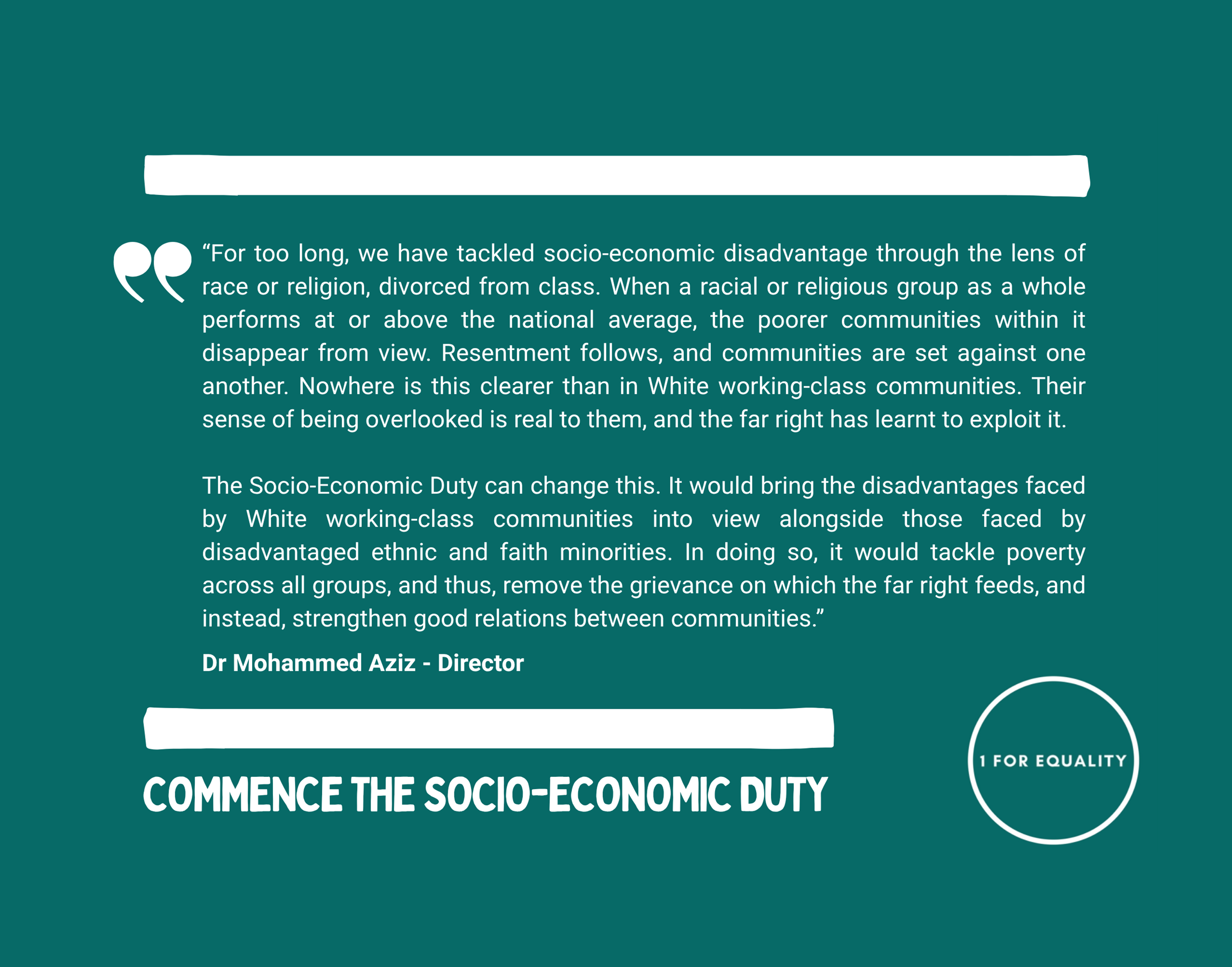
Dr Mohammed Aziz, Director, MLegal   The far right is on the rise and racial and religious polarisation in our communities is deepening. Part of the explanation for this lies in how this country has approached issues of poverty and disadvantage over the years. This Challenge Poverty Week, I argue that we cannot reduce poverty, or heal these divisions, while race and class are treated as separate, discrete questions.   I have worked on equality and community cohesion for more than 30 years, including as a Commissioner at the Commission for Racial Equality and as a senior adviser to government on race, faith and integration. Throughout that time, I have consistently argued for stronger protections for racial and religious minorities, particularly where race and religion are conflated, and I still do. But I have also seen how equality policy that addresses race and religion without addressing socio-economic class has overlooked some disadvantaged communities and left them pitted against others. The Socio-Economic Duty in section 1 of the Equality Act 2010, which has lain unused in England since it was passed, offers a way to change that.   The scale of the challenge is stark. A record 7.4 million low-income families cannot afford essential items, the highest figure since tracking began in 2021 (Joseph Rowntree Foundation, 2026) and around 80% of people think the gap between those on high and low incomes is too large (Institute for Fiscal Studies, 2026).   Race And Religion Divorced From Class For too long, we have tackled socio-economic disadvantage through the lens of race or religion, divorced from class. Yet the public understands that class still shapes lives: 77% say social class affects a person’s opportunities a great deal or quite a lot, up from 70% in 1983 (British Social Attitudes, 2023).   The problem lies behind what averages hide. When a racial or religious group as a whole performs at or above the national average, the poorer communities within it disappear from view. A struggling White working-class estate, or a low-income community within an ethnic or faith group that appears to be doing well overall, can fall straight through the gaps.   The people living in those communities notice. They see support and attention going elsewhere and conclude, understandably, that the system is not built to ‘see’ or support them. Resentment follows, and communities are set against one another.   The Grievance Feeding The Far Right Nowhere is this clearer than in White working-class communities. Their sense of being overlooked is real to them, and the far right has learnt to exploit it, telling them that their hardships are the fault of neighbours of a different colour or faith.   The consequences are visible on our streets. Racial and religious polarisation has risen sharply in recent years, as the far-right rallies in London in September 2025 and May 2026 made plain. Muslim communities, many of whom face deep poverty themselves, have borne the brunt of that hostility.   The tragedy is that the communities being set against each other often have more in common than what divides them: insecure work, poor housing, struggling schools and poor health. As long as our equality framework treats racial and religious groups as socio-economically uniform blocks, and says nothing about class, the disadvantaged within them will remain unrecognised and unaddressed. That silence hands extremists a ready-made grievance.   The Socio-Economic Duty: A Tool For Common Cause The Socio-Economic Duty can change this. Section 1 of the Equality Act 2010 requires public bodies, when making strategic decisions, to have due regard to reducing the inequalities of outcome that result from socio-economic disadvantage. Put simply, councils, development agencies, education authorities, health bodies and government departments would have to ask how their decisions affect people on low incomes and in deprived areas, whoever they are, whatever their colour, and whichever their faith.   That is what makes the duty a tool for common cause. It would bring the disadvantages faced by White working-class communities into view alongside those faced by disadvantaged ethnic and faith minorities. In doing so, it would tackle poverty across all groups, and thus, remove the grievance on which the far right feeds, and instead, strengthen good relations between communities. It does not replace protections against racial or religious discrimination; it complements and reinforces them.   Parliament passed the duty in 2010, yet it has never been brought into force in England, although Scotland and Wales have both commenced it, in 2018 and 2021 respectively. Evaluations in both regions by the Equality and Human Rights Commission point to its potential to improve outcomes for White and ethnic minority working-class communities alike. The Government committed in 2024 to commencing the duty in England, has gathered evidence on how to implement it and, last month, named it an early priority for its new Class Unit. I warmly welcome that commitment. What England needs now is a date.   The Ground Is Ready Across England, many councils have not waited for national action to take the initiative. Research by Resolve Poverty found that 10% of councils have formally adopted the duty voluntarily, and a further 51% work in its spirit, usually by building socio-economic disadvantage into their equality impact assessments (Resolve Poverty). These councils show what is possible, and their experience should shape how the duty is rolled out nationally.   The public is ready too. More than half of people (56%) want the government to activate the duty, with just 6% opposed (Compassion in Politics poll by Opinium, 2020). Some 53% now agree that the government should definitely reduce income differences between those on high and low incomes, up from 25% in 2006 (British Social Attitudes, 2023). And 78% agree the government should be reducing child poverty, a majority in every age group and among voters of every party (Save the Children UK and YouGov, 2026). Those who claim there is no appetite for this duty are simply wrong and out of step with public opinion.   Duty Done Properly, Not As A Tick Box A duty that exists only on paper will not deliver. To reach the communities I have described, it must be implemented with genuine intent, adequate resources and sustained effort. MLegal is proud to be part of 1forEquality, the coalition campaigning for the duty’s meaningful implementation, and we share its priorities:   Leadership and participation. Senior leaders must own the duty. People with lived experience of disadvantage should help shape it as co-creators, not “case studies”, and their involvement should be paid and properly acknowledged. Evidence, not tick boxes. Impact assessments must be rigorous, draw on the best available data, including data held by civil society, and capture cumulative and intersectional effects over time. Outcomes, not processes. Measurable national and local targets should be set in housing, health, education, employment and criminal justice. Guidance and support. Strong statutory guidance, a central support hub like the one piloted in Scotland, and partnerships with civil society should underpin implementation. Wider scope. The list of public bodies covered by section 1(3) should be updated to at least match those in Scotland and Wales. Commencement and futureproofing. A firm commencement date should be set by Commencement Order, and the duty protected from political rollback by a principle of non-regression. Section 1(6), which excludes people subject to immigration control, should not be commenced: it would be impractical, would conflict with the Public Sector Equality Duty and human rights law, and could expose authorities to judicial review. If it is commenced, guidance should make clear that excluding these people is neither required nor practical.   Done well, the duty would also help the UK meet the Sustainable Development Goals on ending poverty, reducing inequalities and building peaceful, inclusive societies.   Our Call At MLegal This Challenge Poverty Week The Socio-Economic Duty is already law, and the Government has, in principle, committed to commencing it. What is still missing is a date and an implementation plan that ensures the duty reaches disadvantaged communities of every background, including those hidden within group averages. We therefore call on:   The Government to turn its commitment into action by announcing a timetable for commencing section 1 in England, and to protect the duty from future rollback. Public bodies to implement the duty under strong statutory guidance that requires them to look beneath group averages so that disadvantaged sub-groups within every racial and religious group, including White working-class communities, are no longer overlooked. The duty should work alongside the Public Sector Equality Duty, so that race, religion and class are addressed together rather than in isolation. MPs of every party, and backbenchers in particular, to champion the duty as a means of both tackling poverty and strengthening relations between communities. Poverty touches every constituency. Colleagues across civil society to make the positive case with us, and to challenge the misleading claims made against the duty.   We will not defeat poverty and social division by setting communities against each other over who is the most disadvantaged. We will defeat them by recognising disadvantage wherever it falls and acting on it together. The Socio-Economic Duty gives us the means to do that. It is time England applied it.   #ChallengePovertyWeek #1forEquality #SocioEconomicDuty

#Inclusion#Freedom of Expression

A Day in Policy: Reflections from MLegal’s Graduate Associates

By Rawan El-Itani, Iman Jaura and Shuaib Amin   As Graduate Associates at MLegal, we have spent the year discussing, researching and presenting on policy issues affecting Muslim and marginalised communities. Last month, we had the opportunity to join the team and shadow them for the day, an experience that gave us a rich insight into how policy is actually made.   Where Ideas Take Shape   The day began with a lunch meeting where the MLegal team presented their research and work on Islamophobia and antisemitism, joined by representatives from civil society organisations working on the same issues. For Rawan, the session was notable above all for what it modelled: “Muslim and Jewish colleagues come together to advocate for the protection of minorities and challenge discrimination.”   We then sat in on a conversation between MLegal and those civil society organisations, an experience that gave us a rare view into how ideas move from grassroots concern to policy recommendation. Iman found it invaluable simply to observe the process, describing it as “fascinating to hear… about their work on Islamophobia, antisemitism and the varying forms of racial abuse.” As an aspiring policy professional, she was struck by “the practicalities and limitations of policy work,” particularly how long it can take for ideas to reach the table and be carried forward, tempered by “the importance of and the promotion of equality and justice.”   Shuaib came away with a similar but more structural insight, into how different forms of discrimination intersect in practice. Tackling Islamophobia, he noted, is rarely argued on the grounds of belief alone. It is often framed alongside gender inequality too, given the disproportionate impact on Muslim women whose identity is visibly marked. Antisemitism, he observed, carries a comparable but distinct dimension, where race compounds the recent rise in anti-Jewish hate crime. The result, in his words, reshaped how he saw the wider landscape: “What I initially believed to be a divided battle over who gets to be in the current policymaking limelight is more like a united front, where the strength of recommendations lies in their unity rather than in their individual political dynamics.” Building bridges between communities, he added, is “not only a grassroots social strategy but also a legal method that enabled each group to gain greater political representation without diluting their individual identities.”   Reflecting On Our Own Progress   Later, we met with Diana and Dr Aziz to reflect on our progress as Graduate Associates. It was a chance to share our own thinking as much as to absorb others’. Rawan valued the space to “share my thoughts, feel heard and gain a better understanding of the process of developing effective policy,” and singled out Dr Aziz’s framework of six steps for achieving a policy goal as a genuinely practical tool for thinking through how change gets made.   Parliament, Past And Present   We closed the day with an informal meeting with a member of MP Fabian Hamilton’s team, who gave us a tour of Parliament and spoke about the different career pathways into working there. Iman appreciated the layered perspective this gave the day, moving from a conversation about the link between policy and legislation with civil society groups to seeing where legislative change is actually implemented. She also came away with a clearer sense of “how legislation comes to pass and how it is discussed and voted on in practice.”   For Rawan, one moment stood out above the rest: learning about the small broom cupboard where suffragette Emily Wilding Davison hid overnight in 1911, using it as her address in an effort to establish a connection to the House of Commons and make a statement about women’s right to vote. Standing in that space, she said, was “a powerful reminder of the determination and sacrifices made by those who fought for political equality.”   A Grateful Close   Between contemporary efforts to tackle Islamophobia and antisemitism and a physical connection to the history of the suffrage movement, the day was, in Rawan’s words, “a powerful reminder that meaningful change is driven by people who are willing to speak up, advocate for others and take action.” Shuaib echoed this in describing why the Associates programme matters to his own development as an aspiring public lawyer, offering “fresh perspectives and in-depth analysis of the dynamics at play in developing policies.”   We are grateful to MLegal, to Diana, to Dr Mohammed Aziz, to the civil society organisations who welcomed us into their conversations, and to one another, for a day that left us inspired, better informed and looking forward to what the rest of the programme has to teach us.

#Freedom of Expression#Inclusion

Reflecting on My Internship at MLegal

Over the past five weeks, my role as a Policy Research Intern at MLegal has given me exceptionally insightful experience and knowledge. I was shortlisted by the Queen Mary University of London careers team and selected by MLegal for this position. The internship has allowed me to deepen my understanding of the policy and legal landscape in the United Kingdom and beyond, combining rigorous research work with direct involvement in the advocacy and networking activities of a leading policy organisation.   My role as an intern has involved researching prevalent social issues and the policies issued in response to them. I have completed six different research tasks, each of which continued to build on the previous skills and knowledge I gained. The research tasks have not only encouraged me to think critically about the policy concerns facing the UK’s diverse population today, but they have also repeatedly sparked my curiosity as I worked through and completed them. One of my favourite tasks was to produce a researched report on how and why the Human Rights Act’s Articles 9, 10, and 11 are currently under threat.   Furthermore, the exposure to and engagement with a variety of policy institutions and individuals have provided me with valuable industry awareness. Some of the meetings I attended and took notes on were with the Green Party, the Avicenna Foundation, and the European Centre for Human Rights (ECHR). In addition, attending the MLegal Community Forum, where I was able to observe several presentations and the feedback they received from experts and consultants at MLegal, was a very insightful and helpful experience.   All in all, my role as an intern has been thoroughly insightful, enjoyable, and thought-provoking. I have gained exceptional research and interpersonal skills, as well as a knowledgeable and informed perspective on policy. Thank you very much to Diana Hysenaj for providing me with excellent-quality tasks and guidance, and thank you very much to Dr Aziz for sharing his learnt policy perspective with me.   Moving forward, I hope to continue gaining more experience and knowledge about legal processes from start to finish, from policy reasoning to making claims to consequential decisions and outcomes.   Kinda Nashef

#Justice & Accountability

Community Response To The Social Cohesion Strategy

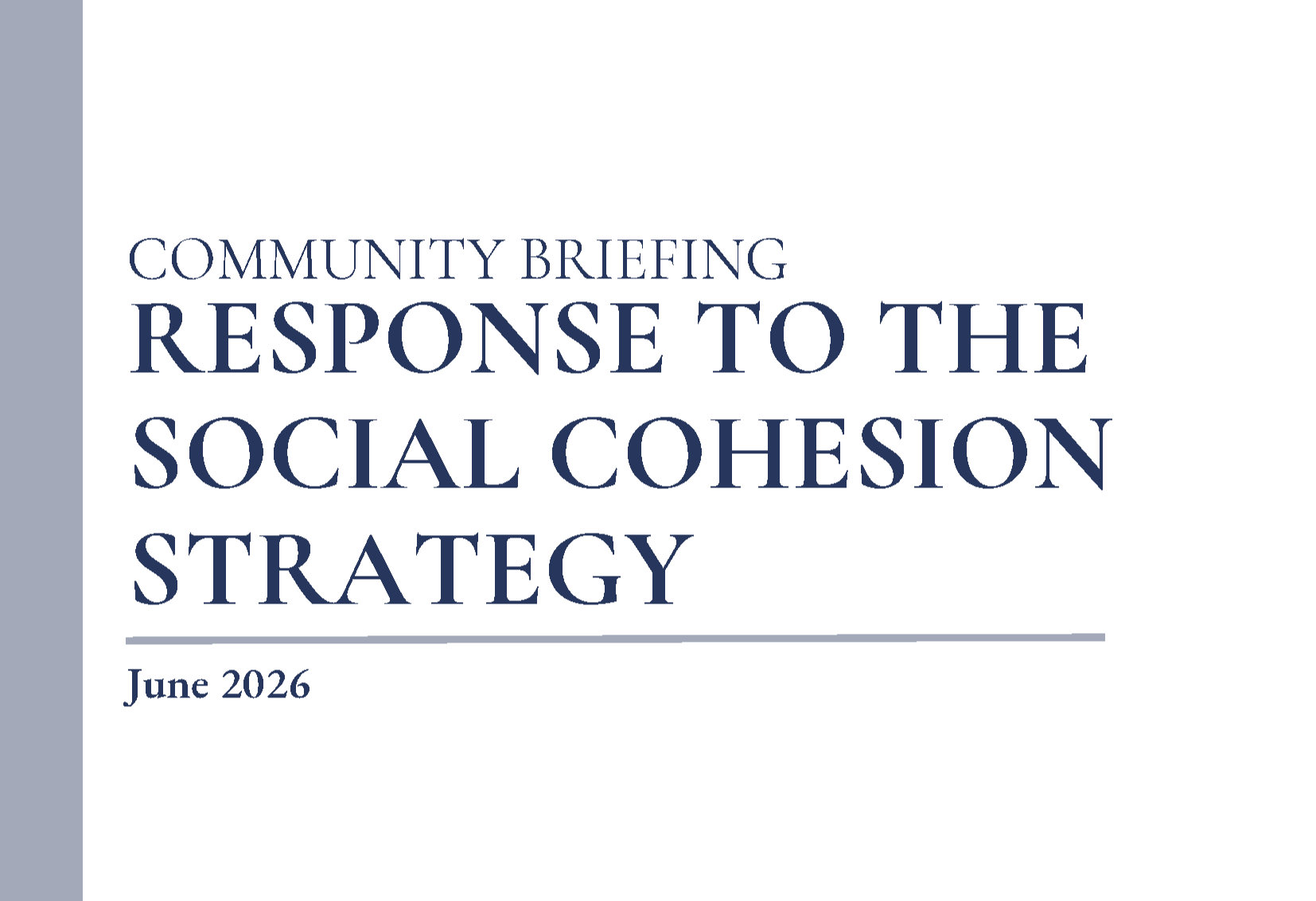
Understanding the Government’s Social Cohesion Strategy: MLegal’s Latest Community Briefing   MLegal is pleased to publish one of its latest community briefing, Response to the Government’s Social Cohesion Strategy, providing an accessible analysis of the Government’s Protecting What Matters strategy and its implications for Muslim communities, civil society organisations, policymakers and other stakeholders.   This briefing has been prepared by MLegal, drawing on discussions with civil society organisations, experts and academics working in this field. It explains the Government’s Social Cohesion Strategy, identifies key concerns for Muslim and marginalised communities, and supports communities to navigate the emerging policy landscape with confidence.   Understanding the Government’s Strategy   The Government’s Social Cohesion Strategy sets out a vision for strengthening belonging, resilience and participation across the UK. It includes commitments that many communities may welcome, including investment in local communities, youth provision, support for places of worship, action against anti-Muslim hate, employment initiatives and programmes intended to strengthen community cohesion.   Alongside these proposals, the strategy introduces or reinforces measures connected to counter-extremism, Prevent, institutional oversight, regulatory powers and local risk assessment. As these policies are implemented across public institutions and local authorities, it is important that communities understand how they may affect civic participation, governance and community engagement.   What the Briefing Covers   The briefing provides a detailed examination of the strategy, including:   The relationship between social cohesion, counter-extremism and national security policy; The implications of the 2024 extremism definition and Prevent-related measures; The Government’s approach to addressing anti-Muslim hostility and the continued importance of recognising Islamophobia; The potential impact on charities, mosques, universities, schools, students and wider civil society; The role of local authorities, neighbourhood boards and public bodies in implementing the strategy; and Practical guidance to help communities understand, monitor and engage with the policy as it develops.   Rather than focusing solely on policy analysis, the briefing is designed as a practical resource to help organisations prepare for implementation, strengthen governance, understand their rights and responsibilities, and engage confidently with public institutions.   Practical Guidance for Communities   Recognising that implementation will largely take place at the local level, the briefing includes sector-specific guidance for:   Mosques and faith institutions; Charities and community organisations; Universities and student societies; Parents and education advocates; and Local civil society organisations and community leaders.   It also sets out an immediate action checklist to support organisations in monitoring implementation, documenting emerging issues, strengthening governance and building collaborative local responses.   Read the Full Briefing   As the Government’s Social Cohesion Strategy begins to shape policy and practice across the UK, it is important that communities and organisations understand both its proposals and their practical implications.   We invite you to explore the full briefing to learn more about the strategy, the issues it raises and the practical guidance it provides for communities, practitioners and policymakers.   Read the full community briefing here: Click Here

Community Forum – Understanding Contemporary Challenges

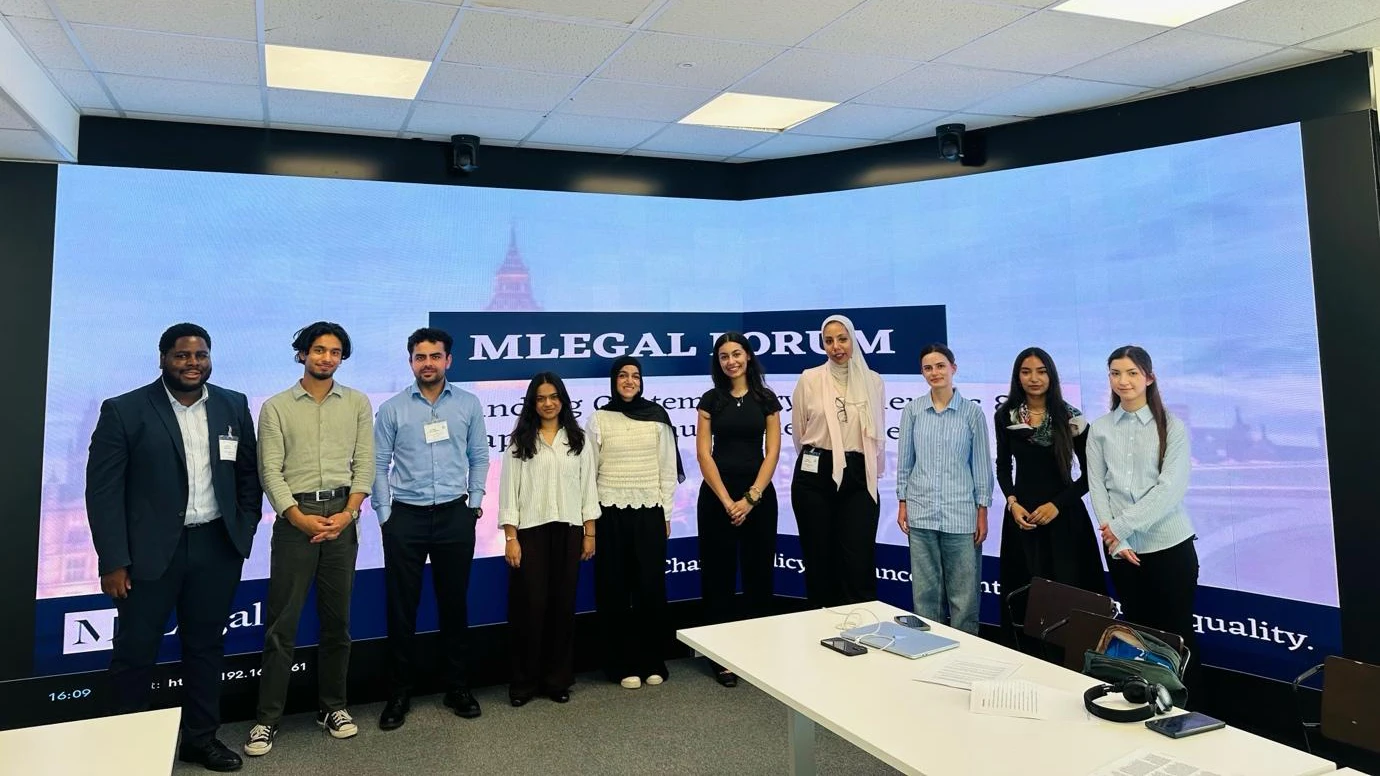
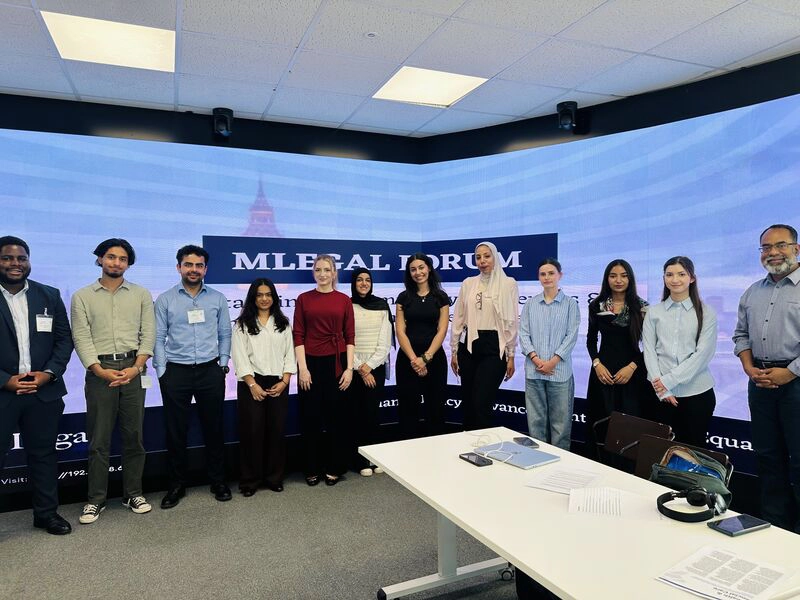
Last week, we hosted a Community Forum on Understanding Contemporary Challenges and Shaping Community Responses, bringing together academics, policy experts, and our MLegal Volunteer Associates for a day of thoughtful discussion, shared learning, and collaboration.   Together, we explored some of the key issues affecting Muslim and marginalised communities today, including the rise in antisemitism and Islamophobia, gendered Islamophobia, emerging forms of extremism, the implications of the Leicester Report, and the development of the Muslim Manifesto as a framework for future policy and advocacy.   The conversations throughout the day reinforced the importance of evidence-based research, cross-sector collaboration, and meaningful community engagement. The Forum also provided a valuable opportunity to exchange ideas, strengthen partnerships, and identify practical ways to take this work forward. A huge thank you to all of our speakers, respondents, and attendees for sharing your expertise, perspectives, and time. Your contributions made the day a real success.   This Forum marks the start of an exciting programme of work at MLegal. As we continue developing the Muslim Manifesto and expanding our research and policy work, we look forward to working alongside a growing network of Associates and partners committed to advancing justice, equality, and human rights.   If you’d like to get involved in our future events, research, or the MLegal Associates Programme, we’d love to hear from you. Get in touch at enquiries@m-legal.org.   #MLegal #CommunityForum #Policy #HumanRights #Equality #Islamophobia #Antisemitism #Research #Advocacy #MuslimManifesto

#Justice & Accountability

DLA Statement

MLegal supports the statement issued by the Discrimination Law Association on the Public Sector Equality Duty (PSED).   The PSED plays an important role in public decision-making by requiring public authorities to have due regard to the need to eliminate discrimination, advance equality of opportunity, and foster good relations when exercising their functions. It helps ensure that equality considerations are addressed at the appropriate stage of decision-making, particularly where policies, service changes, or budget decisions may affect groups protected under equality law.   As the DLA’s statement makes clear, the PSED is a duty to consider. It does not dictate particular outcomes, require absolute equality in every circumstance, or prevent public authorities from implementing decisions that may have adverse equality impacts. Rather, it requires decision makers to properly understand and conscientiously assess those impacts before decisions are finalised.   As an organisation committed to advancing human rights and equality through legal and policy research, strategic advocacy, and community engagement, MLegal recognises the importance of legal frameworks that promote accountability and ensure that equality considerations are not overlooked.   As members of the Discrimination Law Association, we welcome this clarification of the purpose, scope, and continuing importance of the Public Sector Equality Duty.   #EqualityLaw #HumanRights #PSED #PublicSectorEqualityDuty #AccessToJustice   Read the full statement by DLA below:   FOR IMMEDIATE RELEASE   The Public Sector Equality Duty: A Duty to Consider   Discrimination Law Association Statement   The Discrimination Law Association (DLA) has issued a statement to clarify the purpose, scope and importance of the Public Sector Equality Duty (PSED), following widespread public commentary that has misunderstood its nature.   Public authorities make decisions every day that affect people’s housing, education, health, social care, policing, transport, and access to public services. The Public Sector Equality Duty is a legal mechanism that requires these bodies to consider equality when making such decisions. Consistent statistical evidence continues to demonstrate the systemic disadvantages experienced by individuals within protected characteristic groups.   The duty applies to public authorities and certain organisations when they carry out public functions. In exercising those functions, they are required to have due regard to three key aims:   Eliminating discrimination and unlawful conduct Advancing equality of opportunity between those who share a protected characteristic and those who do not Fostering good relations between different groups   In practice, this means public bodies must ask appropriate equality-related questions at the correct stage of decision-making. They must consider whether proposed policies, budget reductions, service changes, or individual decisions could impact groups protected under equality law, including disabled people, women, racial and religious minorities, older and younger individuals, pregnant women, and LGBT people.   Where equality considerations are relevant, public authorities must gather sufficient information to understand potential impacts. These impacts must then be conscientiously assessed before decisions are finalised.   However, the duty has important limits. It does not:   Dictate a particular outcome Prevent public authorities from implementing policies that may have adverse equality impacts Require absolute equality to be achieved in every circumstance Mandate formal equality impact assessments in all cases   The Discrimination Law Association emphasises that the duty plays a vital role in embedding equality considerations into everyday governance and public administration. It ensures that decision-makers address potential disadvantage proactively, rather than after harm has occurred.   Furthermore, the duty provides individuals, communities and equality organisations with a mechanism to challenge decisions where equality considerations have been overlooked or treated as secondary. The PSED originates from concerns highlighted in the Stephen Lawrence Inquiry, addressing systemic inequalities within public institutions.

#Equality

ICESCR Anniversary Letter

MLegal is proud to stand alongside Just Fair and the 76 organisations across the UK in signing a joint letter marking 50 years since the UK ratified the International Covenant on Economic, Social and Cultural Rights.   These rights, to housing, food, healthcare, education, decent work, and social security, are the foundations people should be able to rely on to live well. Yet too many are still denied them. This campaign is about turning long-standing commitments into reality.   Read the letter below and find out more 👇 #ICESCR50 #FoundationForEveryone #ESCRights #HumanRights   ICESCR Anniversary Letter

#Inclusion#Equality

MLegal Associates Explore Equality, Islamophobia, and Public Order

Last week, our MLegal Associates came together for an important milestone in their journey, presenting the work they have been developing across a range of critical areas including equalities, Islamophobia, counter-terrorism, public order, and hate crime.   Working collaboratively in groups, the Associates undertook focused research into these complex and often interconnected topics. Their presentations brought together internal colleagues and external guests, creating a thoughtful and engaging space to explore how these issues operate in practice, where challenges remain, and how policy, law, and lived experience intersect.   Each presentation led to thoughtful discussion, allowing participants to reflect on the research, share different perspectives, and highlight the value of dialogue in addressing issues affecting marginalised communities.   The day concluded with a collective discussion on Islamophobia, allowing the cohort to delve deeper into its contemporary forms, its impact, and the ways it continues to shape social and political landscapes. It was a valuable opportunity for shared learning and critical reflection.   We are proud of the dedication and insight shown by our MLegal Associates and look forward to supporting them as they continue to develop their skills, knowledge, and contributions towards a more just and inclusive society.

#Human Rights

MLegal Joins 180+ Organisations Calling for Stronger Human Rights Leadership

In December, to mark Human Rights Day, MLegal joined more than 180 organisations across the UK in signing a joint open letter calling for stronger leadership on human rights and challenging recent negative rhetoric from government.   Human rights matter most when they are hardest to defend. At a time when core protections are increasingly questioned or portrayed as obstacles rather than safeguards, this collective action sends a clear message: human rights are essential to dignity, fairness, and accountability, and they must be upheld rather than weakened.   As a UK-based non-profit organisation committed to defending and advancing the rights of marginalised communities, MLegal’s decision to sign this open letter reflects our core mission and values. Founded to challenge systemic inequalities, we work at the intersection of civil liberties and human rights through strategic policy work, legal analysis, and advocacy. We see first-hand how harmful rhetoric and policy choices can undermine protections that many people rely on to live safely and with dignity.   Human rights provide a shared framework that protects individuals, strengthens democracy, and ensures those in power are held to account. For marginalised communities in particular, these rights are not abstract ideals but vital safeguards against discrimination, exclusion, and abuse.   By adding our voice to this open letter, MLegal stands in solidarity with civil society organisations, legal experts, and grassroots groups across the UK who are calling for leadership that strengthens human rights rather than eroding them. We believe that informed advocacy, collaboration, and community engagement are essential to achieving meaningful and lasting change.   MLegal will continue to work alongside partners across the sector to promote justice, challenge systemic inequalities, and amplify the voices of those whose rights are too often overlooked or compromised. Together, we are calling for a future in which human rights are protected in law, respected in practice, and real for everyone.   Read the full letter here on the British Institute of Human Rights website.

Phone

012345 798090

Email

enquiries@m-legal.org