
The Government is right to propose strengthening equal pay protections for ethnic minority and disabled workers, bringing them closer to the protection that already exists against sex-based pay discrimination. But unless the reforms are designed with every protected characteristic in mind, they risk replacing one set of unequal protections with another.
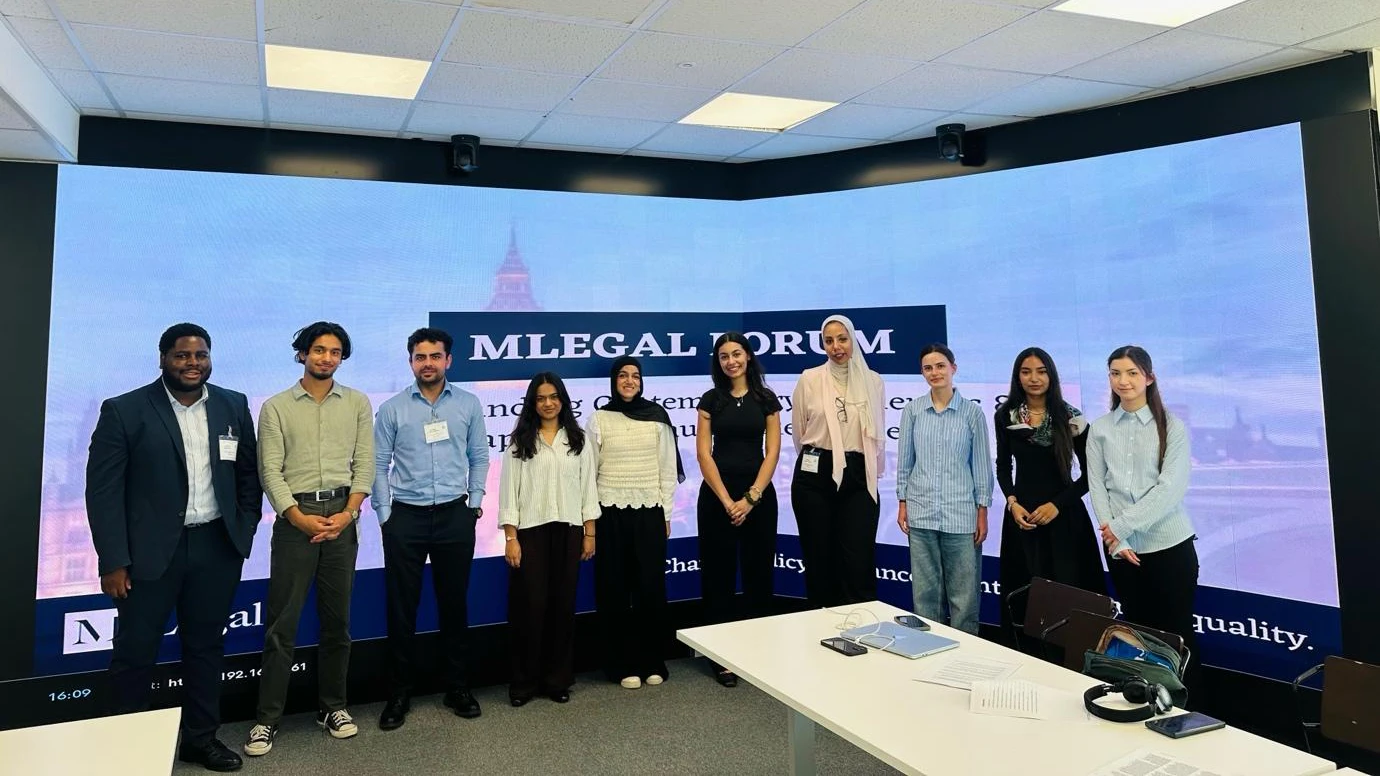
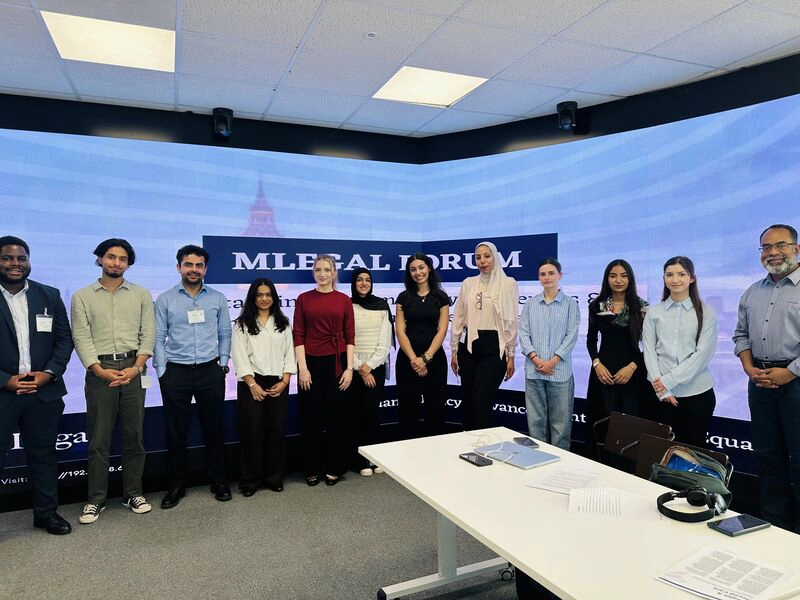
Last week MLegal submitted its response to the Government’s consultation on equal pay and pay discrimination. We support greater pay transparency at recruitment, a stronger enforcement body, and new duties on organisations that outsource work. Our response builds on our Equality Law Reform policy paper, published in May 2026, which makes the case for harmonising equality protections in the UK and ending a framework of unequal protection based on select protected characteristics.
Our concern is with which groups the reforms leave out: people facing pay discrimination because of their religion or belief, those facing it because of more than one characteristic, and workers in segregated and outsourced jobs that the law struggles to reach. You can read the consultation here.
One Law, Unequal Protection
The Equality Act 2010 was meant to consolidate and harmonise protection for everyone. Yet the law already treats racialised religious groups unequally. Because of case law, Sikhs and Jews are recognised as ethnic groups for the purposes of race discrimination law, while Muslims are not. Levelling up pay protection for race but not religion or belief would widen that gap, strengthening the rights of some racialised religious groups while leaving others behind, with no clear policy reason for the disparity.
Pay gap reporting has the same problem. The Government plans to extend reporting to ethnicity and disability, but the official ethnicity data standard does not include Jewish or Sikh as ethnic groups, so even groups already protected as races may not show up in the data. Other religious minorities would be measured only through ethnic proxies, such as Pakistani or Bangladeshi, which miss many people and capture others on grounds of race but not religion. The result is a framework that works clearly for none of these groups.
The stakes are real. Official figures show stark pay differences between religious groups: Muslim employees, for example, have the lowest median hourly earnings of any religious group in England and Wales, at £9.63, compared with £19.22 for Jewish employees (ONS, 2020). Reforms intended to make equal pay effective cannot overlook disparities on this scale.
We have urged the Government either to amend the definition of race in the Equality Act so that it covers all racialised religious groups, including Jews, Sikhs, Hindus and Muslims, or to extend each of its equal pay and pay transparency reforms to religion or belief. Alongside this, the Government should work with the Office for National Statistics and the UK Statistics Authority to close the gaps on how religious groups are captured in ethnicity data.
Learning From Leading Employers
Many leading employers already recognise religion or belief in their workplace practice. The UK Faith-Friendly Workplace Report 2025, published by the Religious Freedom and Business Foundation, found that 94 of FTSE 100 companies featured religion on their public people pages in 2025, up from 79 a year earlier. The number with faith or belief staff networks more than doubled, from 12 to 26, despite a wider pushback against diversity and inclusion programmes.
Leading employers treat religion or belief alongside their other equality obligations, as both good business practice and part of meeting their legal duties. Clifford Chance places faith within its inclusion framework alongside disability, ethnicity, gender, LGBT+ and social mobility. United Utilities, the highest-scoring FTSE 100 company in the report, presents its faith-friendly approach alongside its zero tolerance of discrimination and harassment. Baringa, ranked the most faith-friendly UK workplace for the second year running, links its interfaith network to understanding its clients and communities.
Pay is the natural next step. Where business is already leading, the law should reflect and build on that practice.
Leaving religion or belief out also carries a cost for employers. Policies and systems would have to be adapted for race and disability now, and adapted again if religion or belief is added later. A piecemeal approach also risks creating hierarchies between protected characteristics, damaging workplace culture and staff confidence in fair treatment. Business will inevitably pay a price for government inaction.
Discrimination Does Not Come In Discrete Strands
Many workers face pay discrimination because of more than one characteristic at once: a woman because of her sex and her religion, or a worker because of their race and a disability. The law struggles to recognise their experience in full. Section 14 of the Equality Act, which would allow claims for combined discrimination, has never been brought into force, and as drafted it would not cover equal pay claims.
Government research published in October 2026, Strengthening protections against combined discrimination, found that between 2% and 6% of discrimination cases involve combined discrimination, and that section 14 would be more effective if extended to cover indirect discrimination, harassment and more than two characteristics.
The Government has since concluded, in its response to the equality law call for evidence, that commencing section 14 would not materially increase protection, and will instead produce guidance on how existing law applies to combined discrimination. Guidance is welcome, but the Government’s own research shows that claimants are still forced to split their experience across single-characteristic claims. We continue to call for section 14 to be commenced and updated, so that workers can bring a single claim that reflects their lived reality.
The Workers The Law Cannot Reach
Pay inequality is often built into the structure of work itself. Women, ethnic minority and religious minority workers, and disabled people can be concentrated in particular roles or parts of an organisation. Outsourced workers in cleaning, catering and facilities management are disproportionately from ethnic minority and Muslim backgrounds. Rules requiring workers to compare themselves with colleagues employed by the same organisation, in materially the same circumstances, can shut them out of equal pay protection altogether.
In our response, and in line with our policy paper, we have called for:
Rights That Work In Practice, Not Just On Paper
New rights mean little if workers cannot use them. Very few equal pay claims ever reach a final hearing. Of more than 40,000 equal pay complaints concluded between 2016 and 2021, just 0.09 per cent succeeded at hearing and 0.47 per cent failed (Office for Equality and Opportunity, 2026). We have therefore called for the proposed pay questionnaire to be compulsory, so that employers must answer within a set period rather than choosing whether to respond.
Enforcement matters too. Gender pay gap reporting has been mandatory since 2017, yet between 2023 and 2025 nearly 1,900 warning notices were issued to employers that failed to report, with no investigations, court orders or fines (Lewis Silkin, 2026). The full-time gender pay gap has fallen only from 9.1 per cent in 2017 to 6.9 per cent in 2025 (ONS, 2025). Light-touch enforcement delivers only gradual change.
The new Equal Pay Regulatory and Enforcement Unit must have a remit that covers religion or belief, and it must be properly funded. It should work with civil society and community organisations, and use its enforcement powers consistently, backed by new civil penalties for non-compliance.
More broadly, as our policy paper argues, tackling pay discrimination needs to become more preventative, rather than relying on individual workers to bring claims. Regular pay audits, job evaluation and pay transparency, backed by external enforcement, would identify and address unfair pay before litigation becomes necessary.
Getting It Right The First Time
In its response to the equality law call for evidence, the Government set out a two-part approach to equal pay: first strengthening the current system, then broadening protections to close gaps in the law. Religion or belief must be part of that second stage.
The Government has an opportunity to make the right to equal pay real for every worker. Its reforms should be built around equal protection for all: covering religion or belief, recognising combined discrimination, reaching segregated and outsourced workers, and backed by an enforcement body with the remit, resources and powers to act. Employers can play their part by building on the inclusive practice many already lead on and checking whether pay differs across protected characteristics. We invite colleagues across civil society to make the case with us that equal pay must mean equal pay for all.
We will not close pay gaps by protecting some workers and leaving others behind nor create a labour market in which equal work carries equal value unless all workers; whether defined by race or disability, or religion or belief, are treated equally. A reform that strengthens equal pay for some protected characteristics but not others would only deepen the hierarchy of protection that already exists, in the law and in the workplace.
The Government should get this right the first time.
#EqualPay #ReligionOrBelief #1forEquality #EqualityAct